Autism & Water: Benefits of Swimming & Water Play for Kids with ASD

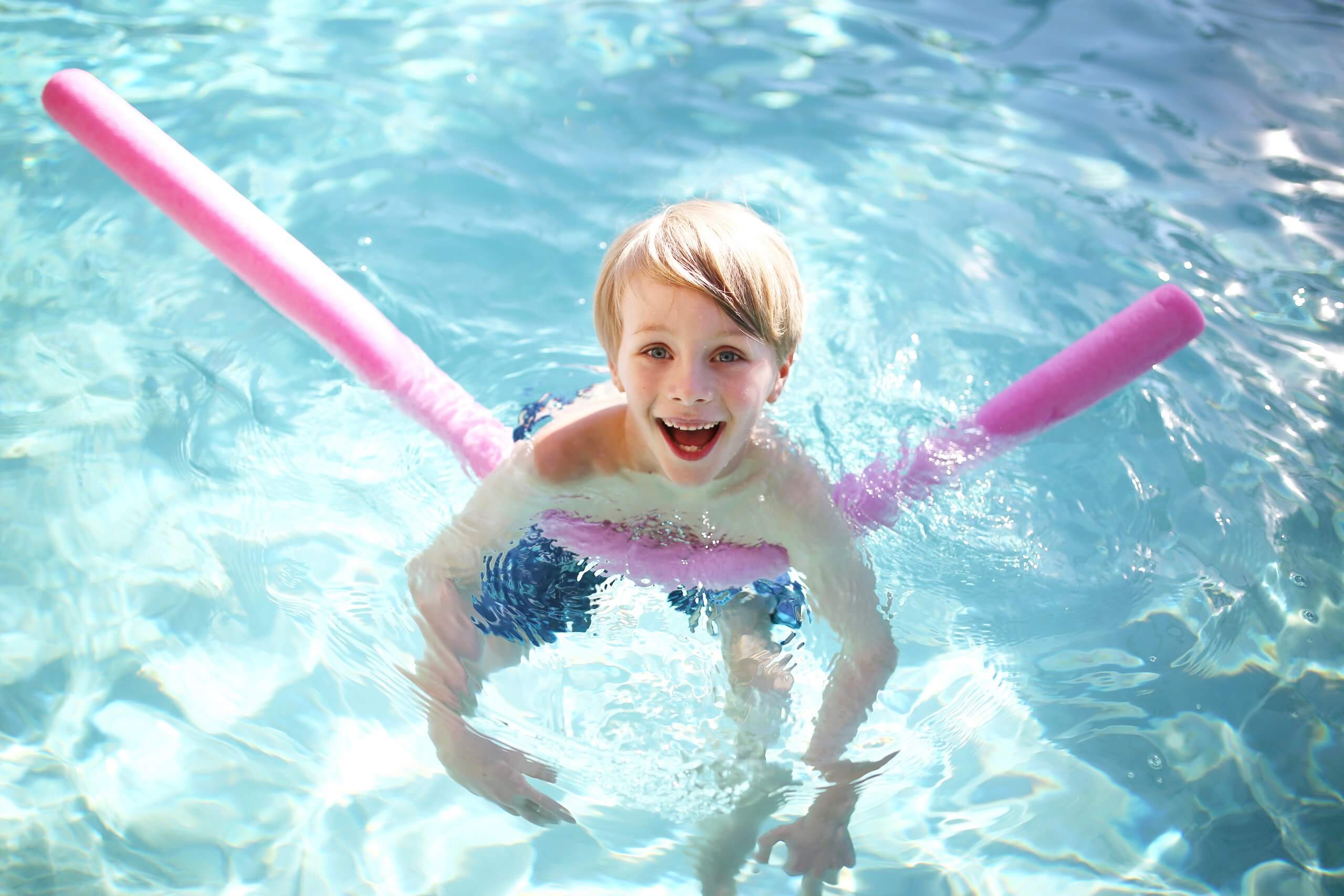
Many children with autism are drawn to water for its calming, sensory experience. In fact, a 2015 study[1] found that children with ASD enjoy swimming significantly more than children without ASD. And while water can present a safety concern, water play and swimming also offer several benefits for children with ASD.

How can you build on your child’s interest with activities that promote safe and fun water exploration? Here, I offer ideas and share the benefits of swimming and water play for kids with ASD.

1.     Leisure skills

Swimming and water play are great alternatives to many sedentary leisure activities in which children engage, such as playing online games or watching videos on screens. Many families of children with autism report difficulty finding non-electronic leisure activities for their child. And while your child may have other interests, it can be an added challenge to find activities that will sustain their attention for longer periods. Ideal for encouraging more extended periods of independent leisure time in children with autism, water play offers a great solution.

Try, for instance, setting up a water table with different sized cups and tools for pouring, scooping, and squirting water. This activity particularly benefits kids who are learning to explore water safely but don’t yet have interest in or safety skills for independent play in a pool.

2.     Physical health

It probably comes as no surprise that swimming and active water play offer fun ways to integrate movement and physical activity into your child’s day. Swimming represents a low-impact exercise and can boost cardiovascular health, while building strength and endurance.

To promote physical health during swimming, practice “bobbing” in the water. If your child does not like water on their face, practice jumping in shallow water. Encourage vocal verbal skills, such as counting, by modeling counting out loud or having your child count or spell as they bob or jump in the water.

3.     Creativity and imaginary play

Swimming and water play offer endless ways in which children can play, allowing you and your child to create new games and use your imaginations to explore the water.

You can investigate the buoyancy of different objects by seeing which objects sink or float. Ask your child to select some water-safe toys, and watch as the toys sink or float in the pool, water table, or shallow bin of water. Another visual, sensory activity involves dribbling a few drops of food coloring and observing how different colors diffuse in the water. For added fun, provide bubbles, sponges, or a toothbrush—and watch what your child can do or create.

4.     Family time

Some families report difficulty in identifying shared interests with their child with ASD, and many children with autism have narrow or restricted interests[2]. However, thinking creatively about safe water play may help you identify additional interests for your child that are shared with siblings and caregivers alike. Family time in the pool or during water play can create a shared activity and interest for the whole family to take part in and enjoy, while giving you a chance to cool off on a hot day.

Encourage your child’s communication by asking questions about what they see, hear, and touch. Do you notice floating leaves, frogs, or beetles that have made their way into the pool? Use these sensory experiences in the water to ask questions, share interest in the water, and promote communication. Your child can practice pointing, nodding, or responding vocally to your questions about your shared environment.

As you enter the last stretch of summer, use these tips to promote fun and safe water exploration. Then, when your child builds confidence in and around the water, consider swim lessons that teach your child water safety. And while the ultimate goal of swim lessons is to teach your child to swim, safety skills like floating, exiting a pool independently, and holding on to a ledge or wall are often taught first. To learn more, read our blog post “5 Steps to Swim Safety for Your Child with Autism.”

What is Contemporary ABA?

People often say that history is written by the victors. When the colonists won the American Revolution, they described the war as a noble struggle to escape tyranny. Had the British won, history books might have called it a heroic effort to save the empire from ungrateful rebels. 

In the same way, most people in America are able-bodied, so they decide what is “normal.” For example, we might see an autistic brain or someone with poor eyesight (but stronger other senses) as less valuable. But really, these are just different ways of thinking and living. 

For more than 60 million Americans with disabilities, this can be a challenge. They have to fit their lives into a world designed for able-bodied people, even though it would be easy to make the world work for everyone.  

Ableism and Ableist Misconceptions

Contemporary treatments include the individual in planning when possible. Contemporary practices change in response to the voices of those who have received therapy in the past. 

Ableism is when able-bodied people assume everyone is like them and fail to see the challenges people with disabilities face.  

Ableism includes unfair ideas, such as thinking people with disabilities always need help, even if they don’t ask for it. Not all disabilities are visible, which can lead to wrong assumptions about mental illnesses being different from physical ones. These false beliefs make it harder for people with disabilities to be treated equally and included in society.  



ABA Intervention

Applied behavior analysis (ABA) is widely regarded as the most effective treatment for autism, supported by decades of research. It isn’t a single therapy method. Instead, it’s a flexible approach that uses different techniques to help children build the skills they need to thrive at school and in daily life. 

Recently, ABA has increasingly become the target of much controversy as self-advocates are speaking up about their experiences. They reject the idea that teaching people with autism the skills deemed necessary without their input or choice. Some advocates say independence is meaningless without happiness and that people with autism should choose their own goals, which might not include fitting in with others.  

ABA, which is essentially the science of good teaching, has a long history and was originally developed in the 1960s by a group of researchers at the University of Washington. ABA was used to treat individuals with developmental disabilities and initially was a rigid, highly structured and teacher-directed program, which led to some of the negative experiences and associations with ABA. Historically, for example, ABA was used to reduce or eliminate “stimming” – repetitive physical movements and sounds that may soothe and reduce anxiety. We now better understand that stimming helps people with autism manage their sensory processing and their environments. 

Just like in other areas of medicine and science, the field of ABA has advanced in a significant and meaningful way to become a play-based, naturalistic, family-focused and individualized, contemporary treatment that is tailored to the unique needs and goals of everyone. A good ABA program collects and reports data to show effectiveness. Providers must demonstrate success, validated by parents, through goals set with the family. If your provider doesn’t follow this approach, they may not be using best practices.  

ABA now adapts to individual needs by learning from adults. While negative experiences must be addressed, dismissing ABA entirely overlooks its success for many. Good programs focus on the client, seek consent, and value input. Research and ask key questions when choosing a provider.  



What to Look for in an ABA Program 

  • Will I participate in determining the goals of treatment for myself/my child? 
  • How are your staff trained? 
  • How is my child’s program developed? Do all clients receive the same program or are they individualized? 
  • Will there be parent goals as part of my child’s program? 
  • How often is my child’s program modified or revised? 
  • How is data collected and reported? 
  • How often will I see data on my child’s progress? 

Your child’s program should be client-centered and future looking, which means that your family and relevant caregivers are providing input into your child’s strengths and challenges, and that you and your child are helping to guide the goals of his/her program based on your preferences and needs. 

The science of ABA has a long history with decades of research to support its development and evolution. While ABA is most widely known in its application to autism, ABA was developed, and has been applied, to address many circumstances regarding behavior that matter to society. ABA is applied in many different areas, including mental health, animal training, organizational behavior management, marketing, forensics, sports, and physical health, to name a few. Just as other areas of science and medicine advance and application of treatments change, so has the field of ABA. Many lives have been impacted by ABA for the better. It is incumbent upon the professional community to listen, learn, and evolve its practice so that their services are as relevant and effective as possible. After all, the purpose of ABA is to help children with autism achieve the goals that matter most to them and their families — goals that foster growth, independence, and joy in their everyday lives.  

Why Wandering Is a Serious Risk for Kids With Autism, Especially in Summer 

 For many families raising a child with autism, one of the biggest fears is a child slipping away. That might mean walking out the front door, leaving the playground or disappearing into a crowd. This behavior, often called “wandering” or “elopement,” can happen in a matter of seconds. It’s more than stressful. In some cases, it can be life-threatening. 

Summer brings even more opportunities for this to happen. Routines shift, outings increase, and kids are often near water, one of the biggest safety hazards for children with autism. Understanding why wandering happens and how to prevent it can help families stay prepared and safe. 

What Is Wandering? 

Wandering happens when a child leaves a safe place without permission or supervision. This can include leaving home, school, a playground, or a caregiver in public. 

In children with autism spectrum disorder (ASD), it’s especially common. A 2012 study in Pediatrics found that nearly half of children with autism had tried to wander or run away at least once after age 4. Of those, 26% were missing long enough to cause concern. 

The reasons vary. Some children may seek out a place they enjoy, such as water. Others may run to escape overwhelming sounds, sights, or situations. But no matter the cause, the risk is high. 

Why Summer Brings Added Risk 

Wandering can happen any time of year, but summer adds new layers of risk. Families are more likely to be out of their routines, exploring new places, or visiting pools, lakes, and beaches. New environments can be exciting, disorienting, or overstimulating for kids with autism. 

Water presents the greatest danger. According to the National Autism Association, accidental drowning accounted for 71% of all deaths resulting from wandering in children with autism under age 15. 

And it can happen fast. The Centers for Disease Control and Prevention (CDC) reports that it takes as little as 20 seconds for a child to drown. 

Safety Strategies That Can Help 

Many families aren’t told about wandering risks when their child is first diagnosed. But there are proactive steps that can help reduce danger. 

Swim lessons are one of the most effective strategies. Some insurance plans may cover swim lessons for children with autism as part of behavioral treatment. Read more in Why Swimming and Water Play Benefit Kids with ASD

Families can also partner with a board certified behavior analyst (BCBA) to teach safety skills. BCBAs can support children in tolerating wearable tracking devices, reducing bolting behaviors, and recognizing safe adults or “community helpers.” 

Other tools include: 

  • Personal ID wristbands or GPS trackers 
  • Secure fencing or home alarms 
  • Creating emergency plans with neighbors 
  • Registering with local police or Smart911.com, which lets families share medical or behavioral information that pops up for 911 dispatchers 

Planning Ahead Brings Peace of Mind 

Not every child with autism wanders. But for those who do, preparation can save lives. 

Summer outings should be fun, not stressful. These 4 Steps to Swim Safety for Your Child with Autism offer practical tips families can use right away. 

For more information on wandering and autism safety planning, visit the National Autism Association’s Big Red Safety Toolkit.